Adjusting the Management of Dairy Cows During Heat Waves
WHAT HAPPENS DURING A HEAT WAVE?
- Heavy sweating to lower body temperature: significant loss of water and electrolytes. A cow may drink more than 250 l/day and lose 2 to 3 times as many electrolytes.
- Reduced movement, especially during the hottest periods: lower feed intake at the feed trough and reduced use of the feeding robot, leading to a gradual decline in milk production.
- Decreased feed intake at the trough: the proportion of concentrates increases while that of forage decreases. Decrease in forage NDF: weakening of the cellulolytic bacterial population in the rumen and a significant increase in the risk of acidosis. This reduction creates a severe energy deficit and accounts for 50% of the drop in milk production. The combination of acidosis and weight loss leads to a high risk of lameness (degeneration of the fat pad, inflammation).
- A very significant increase in a cow’s energy requirements, primarily due to a rise in maintenance requirements of up to 50% and the systemic inflammation caused by heat stress. The latter has a very detrimental impact on immunity, reproduction, and more…
- A decrease in milk production will lead to lower protein requirements and an energy-to-protein imbalance: increased urea levels, risk of inflammation. Unless the robot settings are adjusted, the amount of concentrate will decrease because it is linked to milk production.
4 STEPS TO TAKE DURING A HEAT WAVE:
1. Provide water for the animals
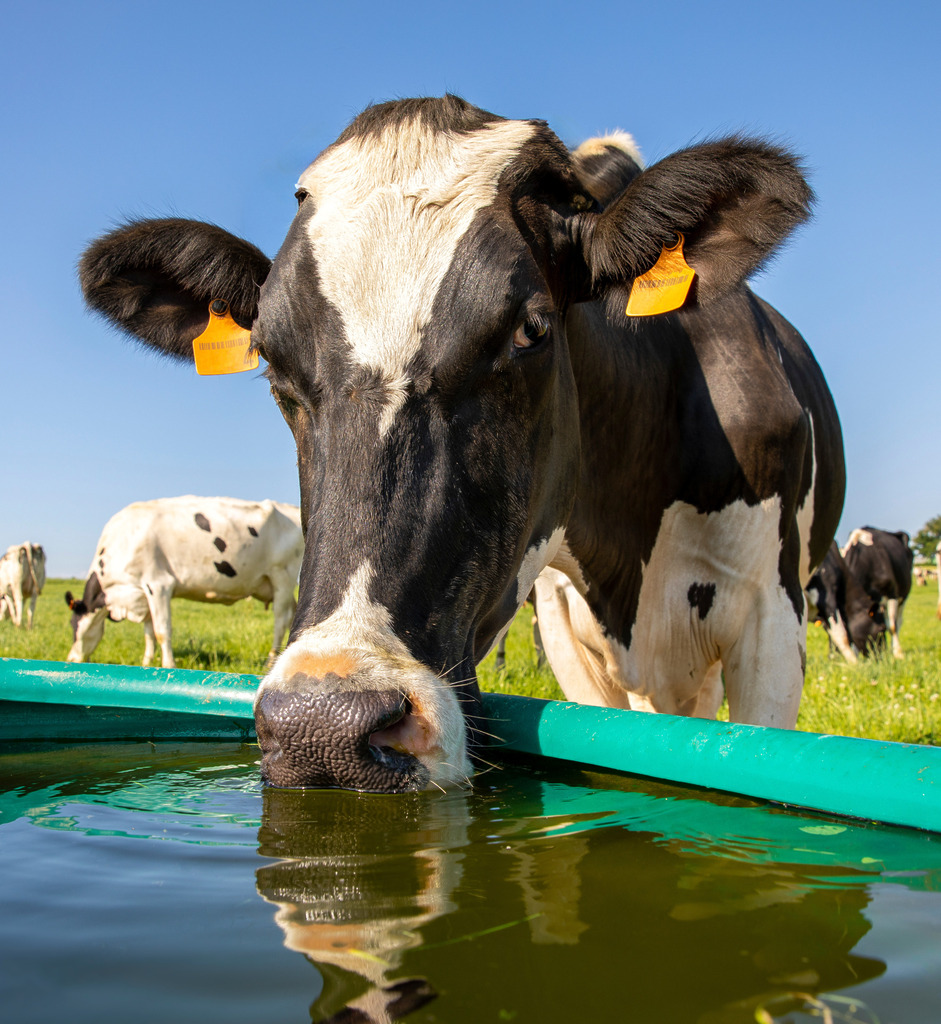
Provide additional water stations. To minimize disruptions to electrolyte balance, an “isotonic” beverage is recommended.
- Deltalitol : 100 ml/body weight/day
- Hydraplus : 100 g/LW/day in the TMR (Total Mixed Ration)
In practice, 16 cm of trough length and 1 trough for every 20 cows are recommended.
Be careful with water troughs located at the robot exit that have a pre-cooler! If the water flow rate is linked to the milk flow rate: A drop in milk production and an increase in water demand = an empty trough. About 30% of the water is consumed at the robot exit.
Focus on Calves: Maximum Vigilance
- All calves must have access to fresh, clean water from the first day of life, including those fed milk.
Early access to water stimulates starter feed intake, promotes rumen development, and supports growth. In hot weather, calves can lose significant amounts of water due to increased respiration and heat dissipation. Water requirements can increase by 50 to 100% under heat stress conditions. - Water alone is often not enough.
Calves under heat stress lose not only water but also essential electrolytes (sodium, potassium, chloride) needed for hydration, nervous system function, and acid-base balance. In addition, heat stress increases oxidative stress, which can impair immunity and performance. - Diarrhea makes the situation much worse
When diarrhea occurs in hot weather, water and electrolyte losses increase dramatically. A calf with diarrhea can lose 4 to 8 liters of fluid per day, which quickly leads to dehydration, reduced milk intake, slowed growth, weakness, and an increased risk of disease. - Why use a specific moisturizing solution?
A high-quality, milk-soluble hydration solution, rich in electrolytes and antioxidants, provides:- Water to Replenish Hydration
- Electrolytes to help replenish losses
- Energy sources to support recovery
- Antioxidants to reduce the negative effects of oxidative stress and support immunity
- Hydraplus : 50 g per calf per day, to be distributed throughout the feedings
2. Preparing the feed at the trough
First and foremost, it is important to encourage feed intake. Feed the ration in the evening. Adding sugar will have a positive impact on feed intake, reduce selective feeding, and stimulate bacterial activity in the rumen without increasing the risk of acidosis: target 5%.
- Deltagreen is a highly palatable liquid solution rich in sugars with a diverse fermentation profile designed to stimulate ruminal activity. It contains plants that aid in the digestion of fat.
Prioritize the most digestible forages to compensate for the decrease in intake.
Avoid letting the feed get warm in the trough: feed twice a day, with 2/3 of the amount given in the evening. Acids may be added.
Increase the energy content of the ration by adding fat: Prioritize saturated fats (palmitic acid) to avoid affecting ruminal biohydrogenation.
Be careful not to consume too much fast-acting protein: limit the amount of ANP you add.
3. Ensuring Healthy Rumen Function: Minimizing the Risk of Acidosis
Heat waves will rapidly increase the risk of ruminal acidosis. Acidosis will affect the cellulolytic flora and promote intestinal inflammation.
- Distribute Administer at a dose of 100 to 200 g/livestock unit/day for the duration of the heat wave: reduces the risk of acidosis.
- Aim for a BACA between 350 and 400 meq/kg DM
- Live yeast will have little impact over a short period of use when immediate effectiveness is needed.
- Ensure safe starch fermentation in the rumen with Amiviv’.
4. Optimizing the milking robot
Adjust the concentrate feed rate to prevent the robot from following the milk flow downward.
Slightly relax the milking requirements for cows: reduce the required milk volume for milking by 10%.
Be very careful when cleaning the teats and during post-milking dipping (extend the spraying time). Step up efforts to control flies.
Reducing the risk of lameness:
- Peditonic improves the quality of hooves, claws, and skin: 50 g/livestock unit/day
- Setting Up a Foot Bath
Post-Heat Wave Management
The combined effects of the heat wave on dairy cows will place a very heavy strain on their bodies: high consumption of trace minerals and vitamins, and extreme stress on the liver due to imbalances in energy metabolism…
It is recommended to take a liver-protective treatment, followed one week later by a course of oligo-vitamins, in order to optimize milk production.
- Deltapass FL : 100 g/livestock unit/day for 10 days in the total mixed ration (TMR): liver support
- Bufflo® Tonic Axion® 200 g/livestock unit/day (100 g?) for 5 days in the RTM: a blend of vitamins, trace minerals, and antioxidants