Why does the body conformation of heifers make all the difference for future dairy cows?
We cannot stress this enough: to have good cows, you must first have good heifers. And their conformation — that is to say, their height, weight and body balance — has a direct impact on their entire career.
1. Everything comes down to the next six months
At this age, the heifer is developing its skeleton, its rumen, its future feed intake capacity, and even the foundation of its udder.
Target: 200 kg and a chest circumference of 130 cm.
A well-developed heifer at 6 months will produce more milk, have a 40% chance of reaching a 3rd lactation, and remain in the herd for longer.
2. Between 6 and 15 months: watch out for fat !
This is the most critical stage. If the heifer grows too quickly :
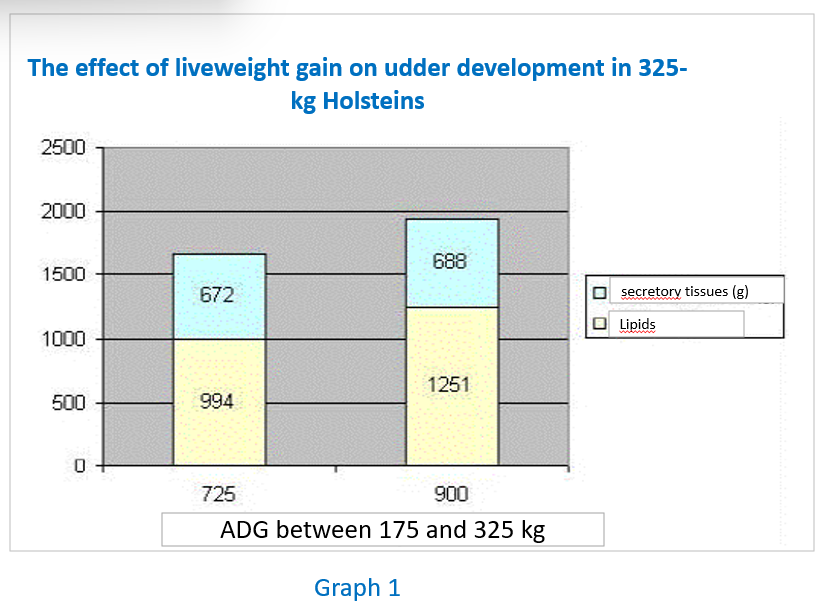
- It produces fat in the udder → reduced milk yield in future lactations (Figure 1)
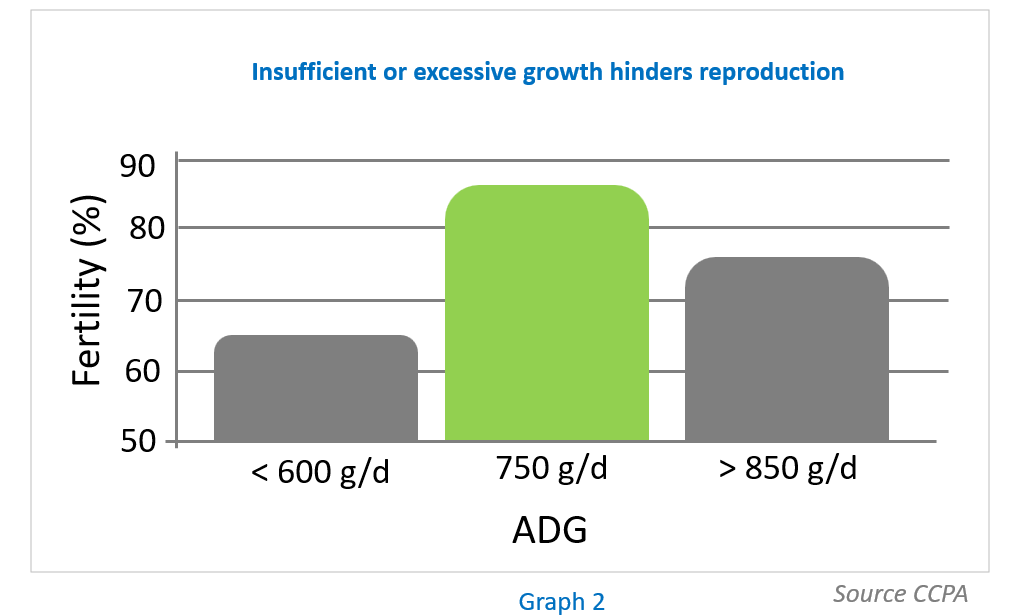
- It becomes more difficult to inseminate: AI success rate < 60% (Figure 2)
- It risks of being too fat at calving
The aim is therefore steady but not excessive growth (ADG < 800 g/day).
3. Analysis of the morphology of 15,000 heifers and prediction of their future performance
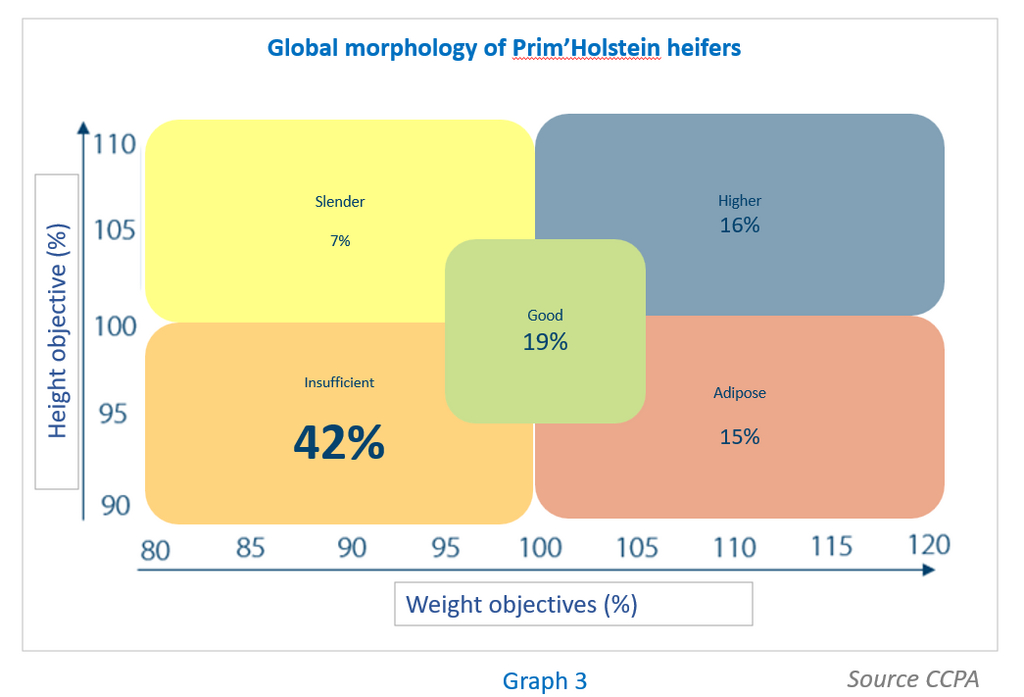
A study conducted by CCPA between 2024 and 2025 on 15,000 heifers monitored using Morphoscore across 340 farms in France (Figure 3), and a study carried out in 2019, show that heifers:
- «Superior» (16% in the study) or «Standard» (19%) cows go on to become much better cows: they produce more milk, have greater longevity, suffer fewer reproductive problems and enjoy the best careers.
- «Inadequate» (42%) remain small and produce less: -600 L in the 1st lactation
- «Fatty» (15%) have poorer lactations: -370 L in the 1st lactation
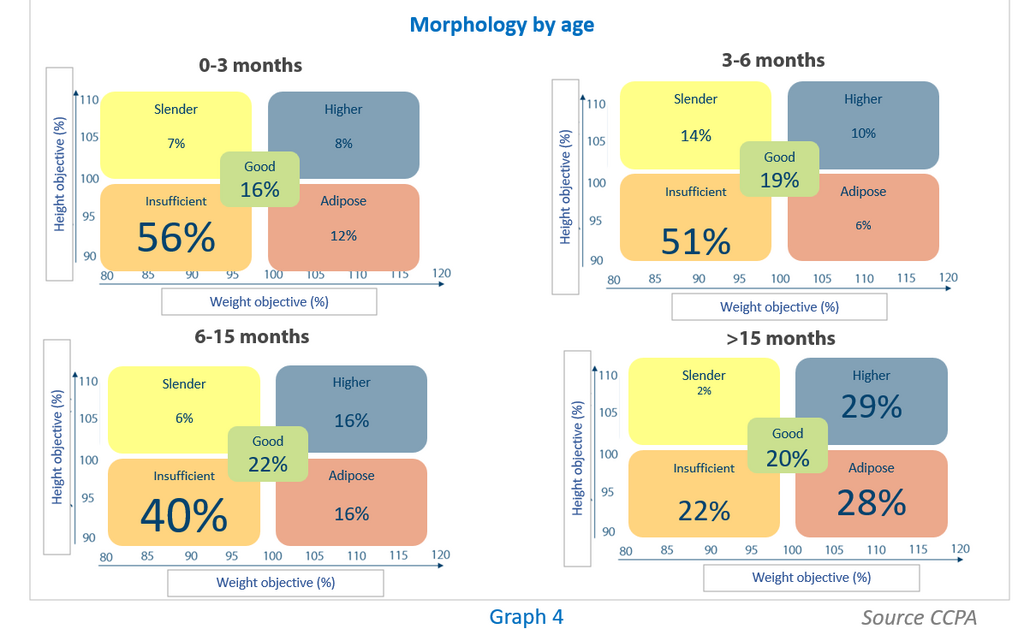
During the 0–3-month phase, growth was found to be insufficient (715 g/day, against a target of 900 g/day), as was the case during the 3–6-month phase (835 g/day against a target of >900 g/day) (Figure 4).
Conversely, there was significant catch-up growth between 6 and 15 months (816 g/day against a target of 750 g/day), a phase during which adipose tissue develops. The result was an increase in the number of fattened heifers after 6 months (Figure 4).
4. Better conformation = earlier calving age
In line with this objective, heifers should calve between 22 and 36 months, depending on the system (forage, housing, capital investment).
- A heifer over 15 months old should aim for 24 months before calving.
- A heifer that is underdeveloped should aim for 30 months.
Early, well-prepared calving (bringing the age at first calving down from 28 to 24 months) results in a savings of €180 per heifer and an additional 2.1 kg of milk per day of life.
5. A good start = more milk for life
According to these two studies, the impact of heifers’ body conformation on milk production was calculated:
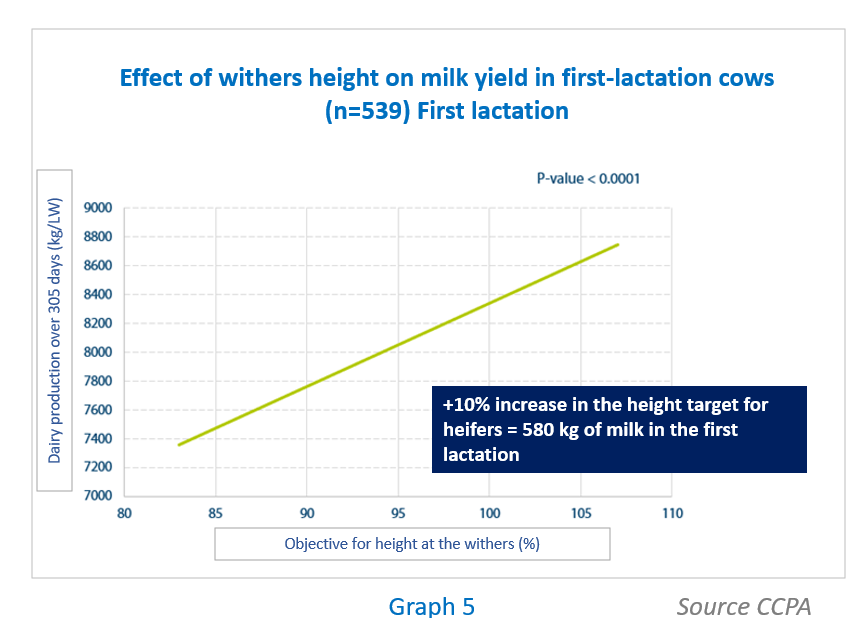
- +10 cm at the withers = +580 litres of milk in the first lactation and +440 litres in the second lactation (Figure 5)
- +10% weight: +140 litres in the 1st lactation
- Moving from a majority of heifers classified as ‘Insufficient’ to ‘Superior’ (+15% weight and +15% height): +1,080 litres in the 1st lactation / +660 litres in the 2nd lactation
- Improved longevity: Gain of 0.64 lactations
In improving the conformation of heifers from a very young age, a farmer can earn up to €2,810 per heifer (gross margin excluding overheads).
6. In short: physical development begins at an early age!
- A good heifer = a good cow
- Ultimate goal: production, durability, profitability
- Before 6 months: developing the skeleton and udder (maximum growth)
- 6–15 months: managing energy intake (avoiding overfeeding)
And in reality?
Tracking growth allows you to adjust the heifers’ feed regime, thereby promoting good conformation:
- Using a tracking tool, such as Morphoscore
- Adapted feeding programs and nutritional solutions to support animals from conception to their first calving: Program Morphostar